Yes, please! I am DYING for pasta now!
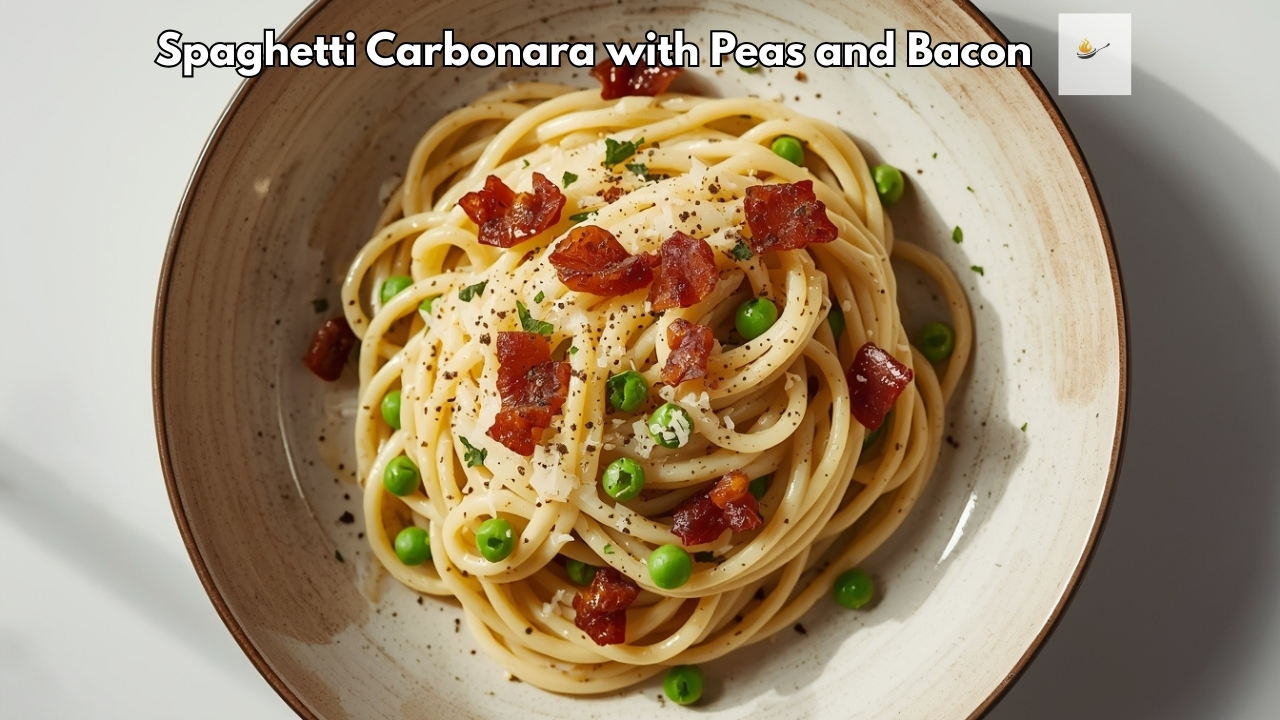
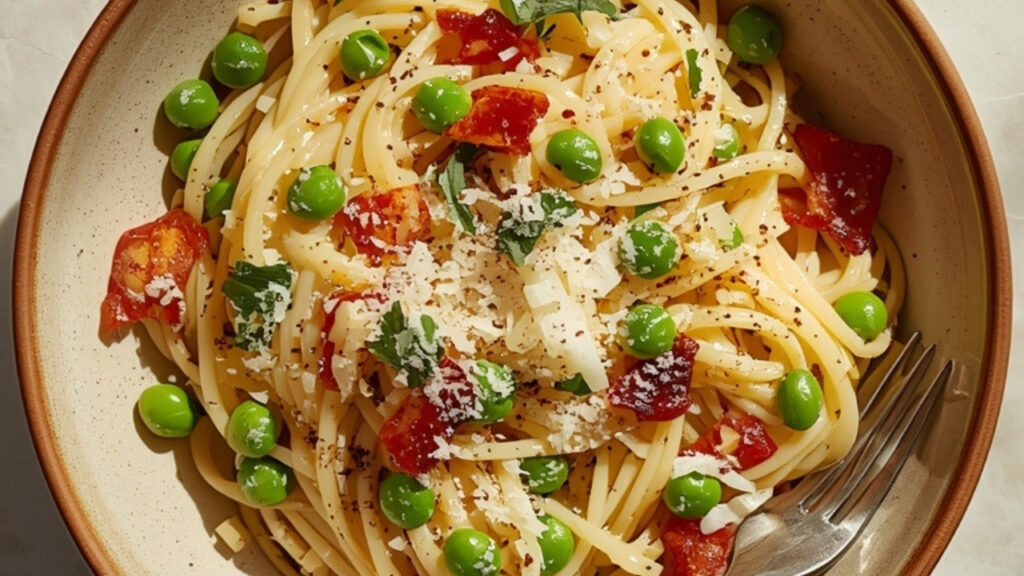
I usually don’t love carbonara, but this Spaghetti Carbonara with Peas is a full-on win. Nice balance of simple ingredients with crispy bacon, tender spaghetti, sweet green peas, and a silky, creamy sauce; every bite is rich and satisfying. This easy spaghetti carbonara with peas proves that no complicated prep, no long ingredient list is required, just straightforward cooking and big flavor!
This Roman-inspired classic pasta alla carbonara with peas and bacon is a quick, creamy recipe ready in under 30 minutes. The creaminess comes without heavy cream, which gets a fresh classic comfort dish with a practical twist from sweet green peas and crispy bacon for a perfectly balanced, family-friendly dinner.
Why Only This Spaghetti Carbonara with Peas Recipe
- Peas add freshness and balance: The sweet green peas lightens the richness, and I love how they bring a bright pop of green and a slightly sweet, fresh flavor.
- No cream needed: Eggs and grated cheese create a naturally creamy, glossy sauce without using any heavy cream.
- Quick and affordable: Inexpensive, made with pantry staples and ready in less than 30 minutes.
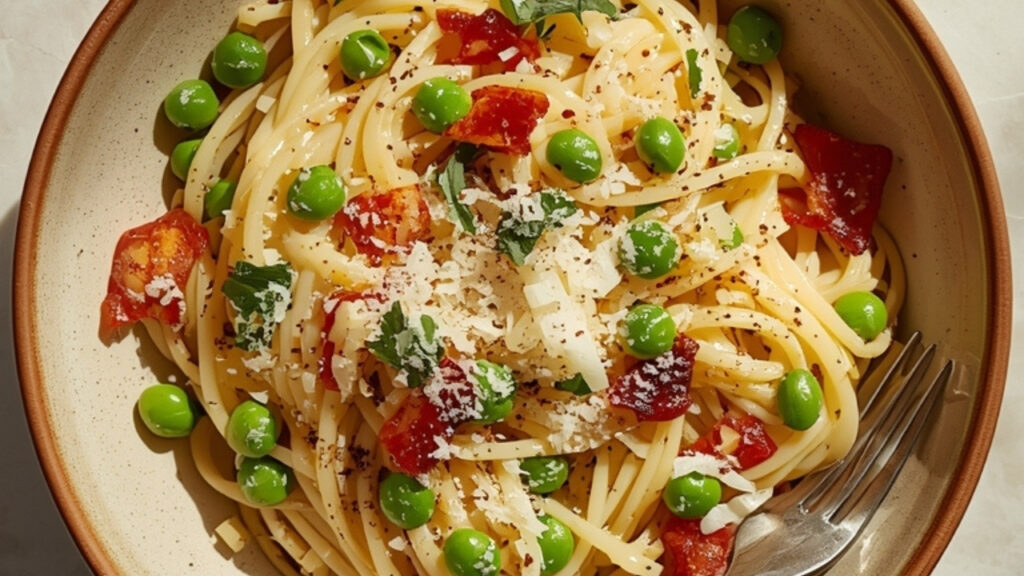
Instead of traditional guanciale (Italian cured pork jowl), I always use thick-cut American smoked bacon. It brings deep, smoky flavor with plenty of extract fats for creating silky carbonara sauce. Serve it with something light like baked spinach or Italian Caprese Pasta salad for a complete, balanced meal.
This recipe version isn’t typically traditional, but that’s exactly why I love it.
If you love Roman-style pasta, be sure to try Spinach Artichoke Pasta bake, Creamy Jerk Chicken Pasta , or Quick Pasta Carbonara with Philadelphia Cream Cheese next!
Ingredient Notes
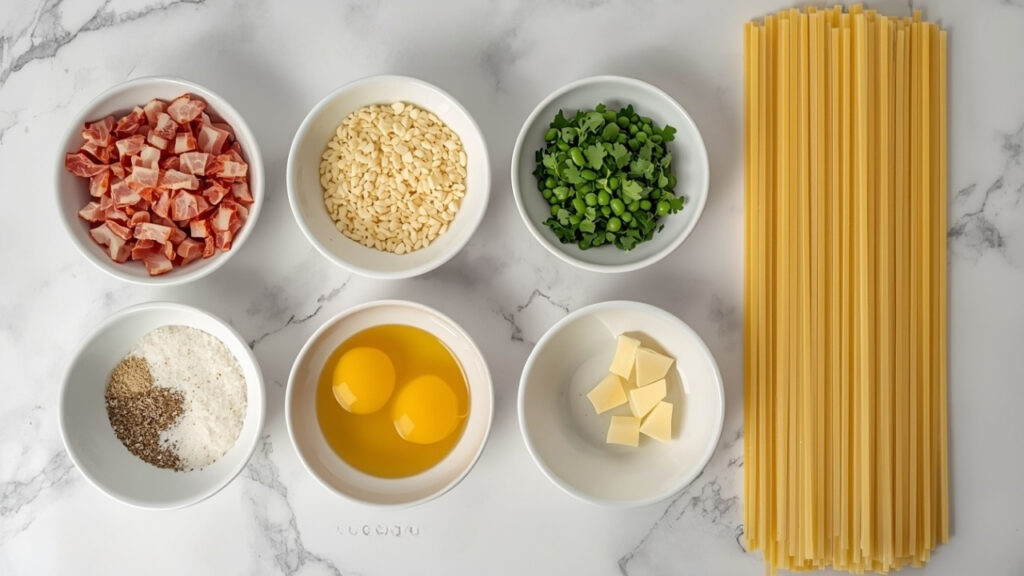
- Bacon – 4 slices thick-cut bacon, about ¼ lb
Traditional spaghetti carbonara is made with guanciale, and sometimes with pancetta. For this non-traditional version, I use thick-cut American smoked bacon; it is best to ensure nice, big meaty chunks. It provides enough fat to emulsify the sauce and adds an irresistible smoky flavor.
Note: Avoid using the turkey or plant-based bacon for this recipe, as they don’t release enough fat to create a rich, crispy texture. Instead, prefer thick-cut or slab bacon so you get those hearty, meaty bites that really make the dish.
- Pasta – ½ lb pasta
Traditional spaghetti carbonara with peas is made with authentic long linguine pasta. Any long pasta shape like Fettuccine or Capellini is ideal for authentic texture, but a short shaped pastas can also work in a pinch.
Note: For best results, use bronze die-cut pasta; its rough surface allows the sauce to cling to every strand.
- Cheese – ½ cup Pecorino Romano cheese, ½ cup Parmesan cheese
Classic carbonara recipe typically uses Pecorino Romano, a sharp sheep’s milk cheese. But I prefer a blend of Pecorino Romano and Parmesan for a slightly more balanced, rounded flavor.
Note: Use high-quality cheese like Locatelli, Grana Padano, or Parmigiano Reggiano and always grate fresh for best results.
- Peas – 1 cup frozen peas
You certainly use fresh peas when they’re in season, but canned or frozen peas work perfectly year-round. |Before using, they need to be fully defrosted so they don’t cool the pasta and prevent the sauce from thickening properly.
Note: Place them in a strainer and run under warm water for a few minutes while preparing recipe ingredients.
- Eggs – 1 large egg plus 2 egg yolks
The secret key to making silky carbonara sauce is a combination of whole eggs and extra egg yolks. Bring them to room temperature before cooking to avoid the sauce to thicken up.
- Black Pepper – 1 heaping teaspoon black pepper
Freshly cracked black pepper is essential for a bold peppery finish. If you don’t have one, you can crush whole peppercorns in a pepper grinder or with a meat mallet.
- 1 clove of garlic, peeled and smashed
- 1 tablespoon Italian flat-leaf parsley
Required Equipments
- Large skillet
- Large pot for boiling pasta
- Pepper grinder
- Mixing bowl
- Tongs
How to Make Spaghetti Carbonara with Peas and Bacon
Bring a large pot of salted water to a rolling boil.
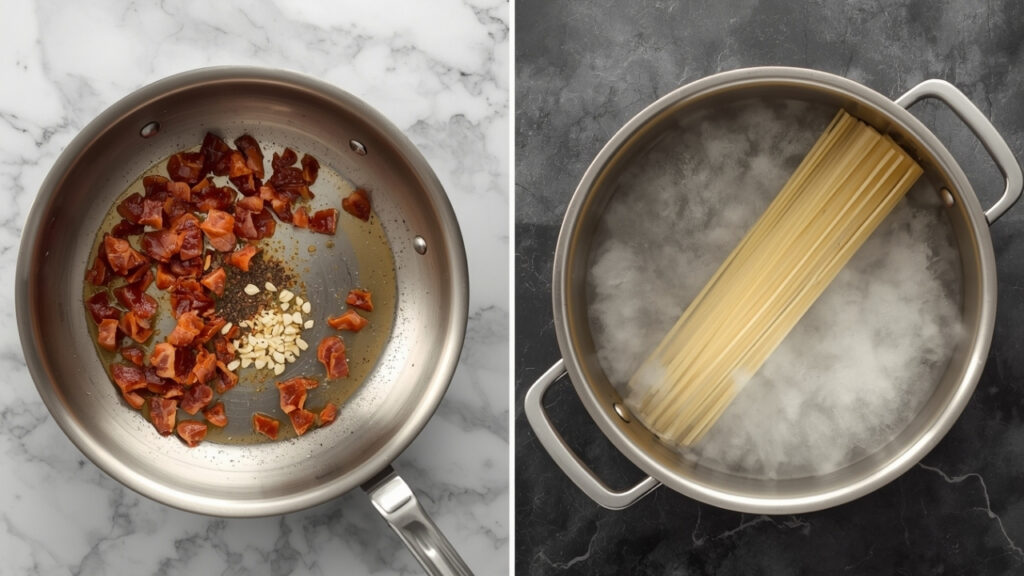
Meanwhile, place the bacon in a large skillet at room temperature, then turn the heat to medium. Sauté for 2–3 minutes, letting the bacon fat slowly render out. Once it starts to sizzle, add in the garlic clove and a generous pinch of black pepper.
Continue to cook until the bacon becomes crisp and the garlic is light golden brown. Remove the garlic clove if you desire (I leave it in).
Continue to cook until the bacon is crisp and the garlic turns lightly golden brown. If you prefer a milder garlic flavor, remove the clove at this point.
Pro Tip: Do not drain the bacon fat; you need the grease for building the sauce.
Once the salted water starts boiling, add the pasta and give it a stir. Cook about one minute less than the package instructions to ensure it stays al dente.
Pro Tip: Cook pasta in slightly less water than usual. A higher starch concentration in the pasta water will help create a silkier sauce.
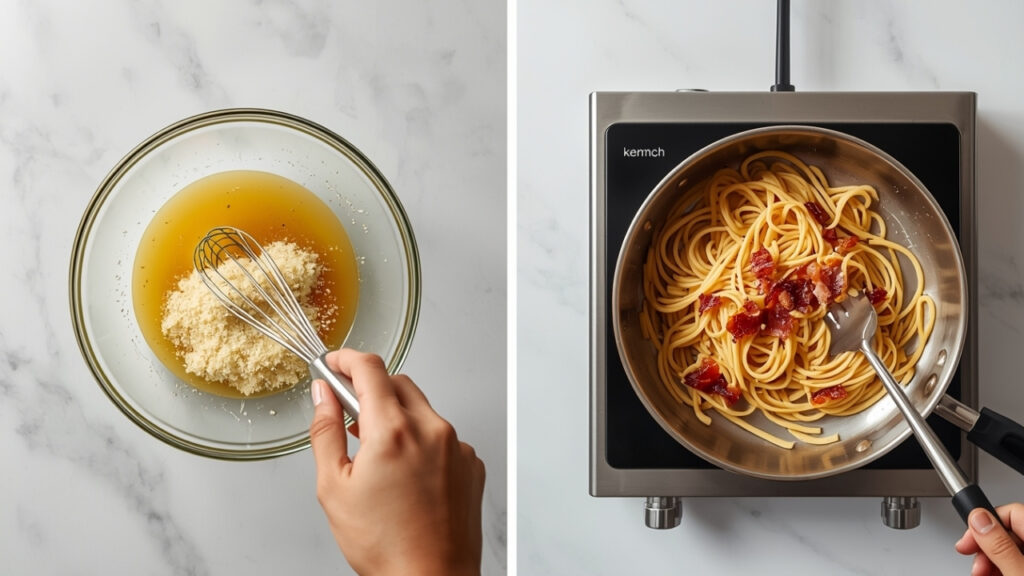
While the pasta cooks, whisk together the eggs and grated cheese in a bowl until smooth.
Before draining, scoop out at least 1–2 cups of hot pasta water, then drain the pasta and immediately add it to the skillet with the bacon. Turn the heat to medium-high and toss for 1–2 minutes so the pasta absorbs flavor.
Add a splash of hot pasta water to the egg mixture and gently whisk it. Then pour the egg mixture over the hot pasta so the eggs don’t scramble, and continue tossing so the heat creates a thick, glossy sauce.
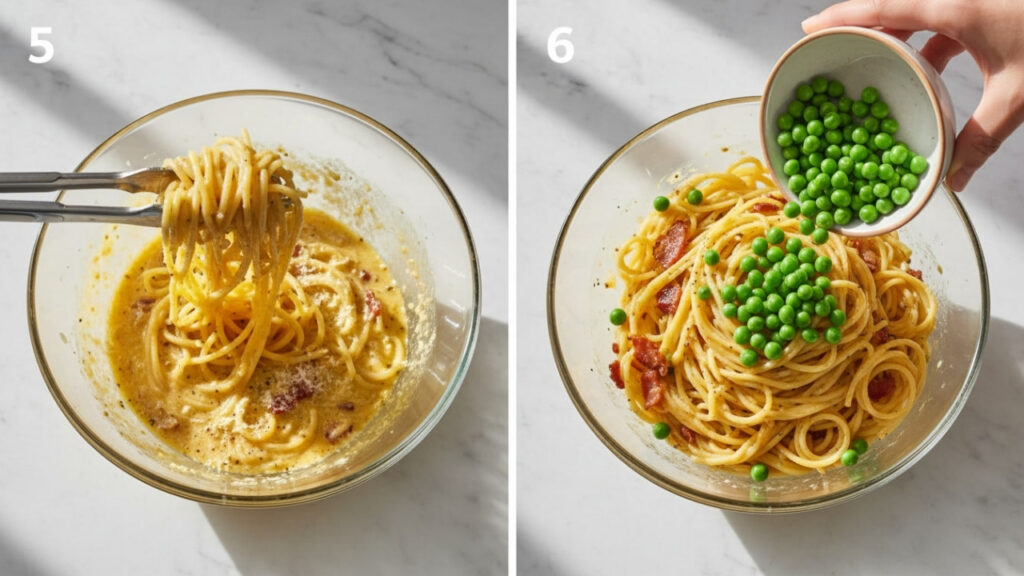
Pro Tip: If the sauce seems too thin, place the bowl over the pot of hot pasta water; the gentle heat will warm the pasta enough to help form the sauce.
Add the peas and continue mixing until evenly combined. Adjust consistency with more pasta water or cheese as needed, then taste and adjust seasoning.
Transfer to plates and finish by topping with parsley, grated cheese, and more freshly cracked black pepper. Serve hot & immediately!
Tips for Success
- Use room-temperature eggs and peas to avoid cooling the pasta too quickly.
- For softer and more tender peas, add them to the pot of boiling pasta during the last minute, then drain everything together.
- Be cautious with salt — bacon and cheese are already salty.
- Don’t sea salt the pasta cooking water because bacon and cheese are already salty.
- For even more flavor, finish with lemon zest, fresh chives, or mint right before serving.
Conclusion
And yes, sometimes the creativity gets interesting! My 8-year-old recently showed me how to make a bracelet out of dried glue, which is something I used to do when I was growing up in Venezuela. Funny how simple memories come back during quiet family time. That’s what I love about comfort food, just like spaghetti carbonara with peas. It brings everyone together.
FAQs
How to reheat pasta alla Carbonara?
No one likes wasting good pasta. So, this is the dish; it doesn’t reheat perfectly. If you do have leftovers, here’s the gentlest way. Add about 2 teaspoons of water to the pasta, then microwave it in 30-second bursts, stirring between, until it’s just warmed through.
Do I use raw eggs for carbonara?
Yes, pasteurized eggs are generally safe to eat, but if you’re pregnant or just feeling cautious, in this case, it is best to skip them to be on the safe side.
Does Carbonara have cream in it?
Traditional carbonara doesn’t use heavy cream. It naturally gets creaminess, rich texture comes from eggs, cheese, and the rendered fat from the pork.